PACS
Personal Access Communications Systems
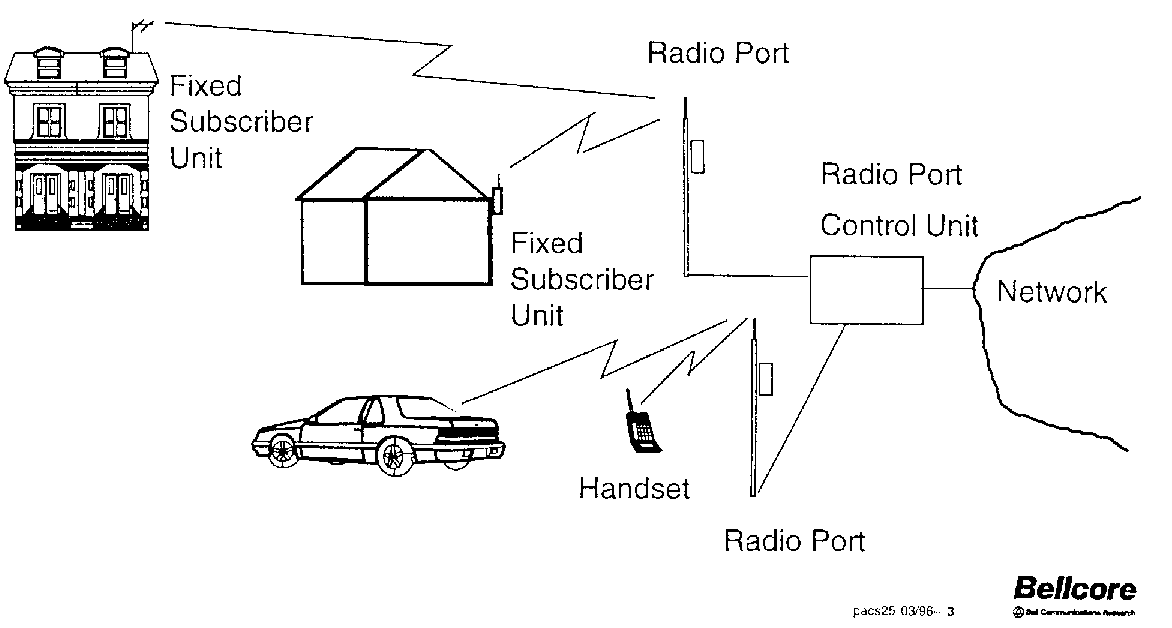
PACS Architecture For PCS And wireless Local Loop
Major Low Power Wireless Access Systems
Trend and Enhancement
Basic Characteristics of PACS, PHS, and DECT
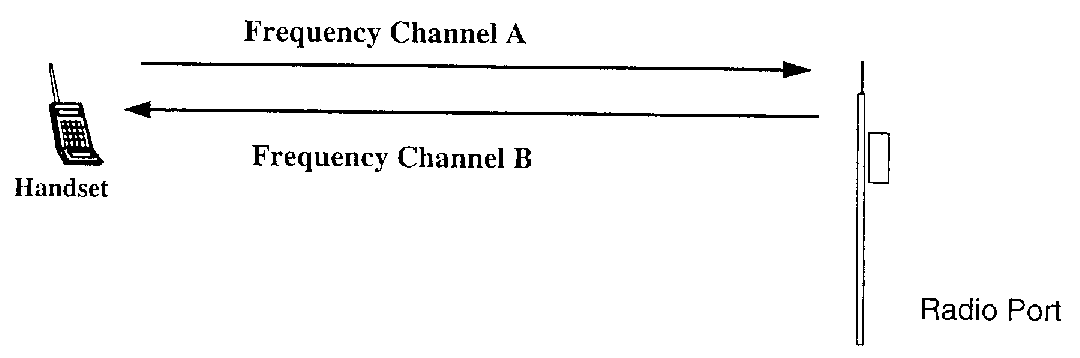
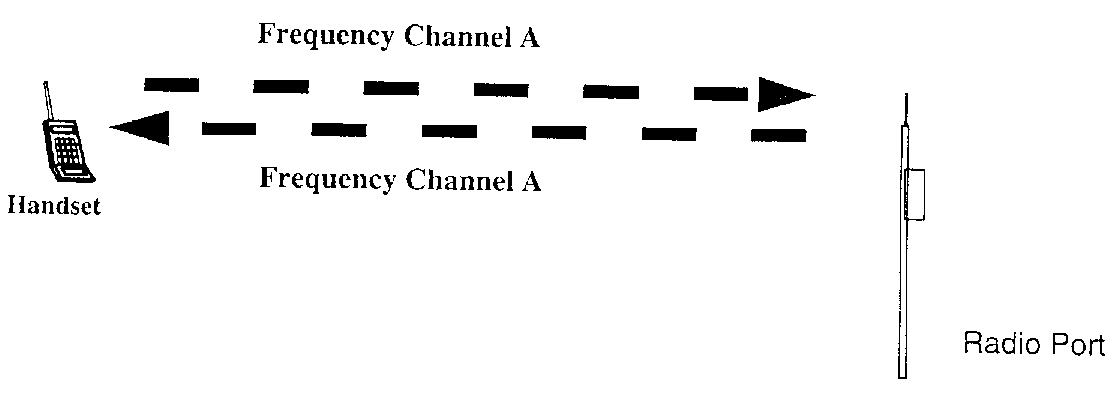
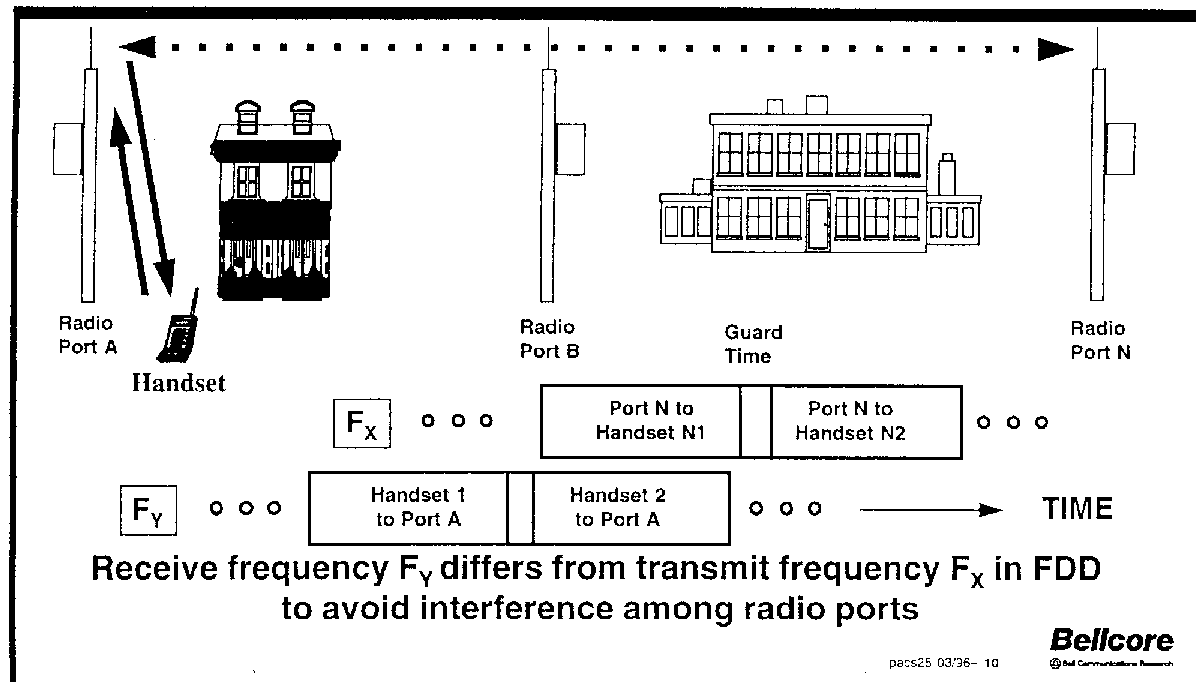
FDD and TDD
Inter-Port Sync for TDD
Inter-Port Sync for TDD
Comparison Of System Gains Of PACS,PHS And DECT
Greater Coverage Range And Lower Deployed Cost Of PACS
Main Factors Contributing to Excellent System Gain of PACS
Lower Cost Of PACS Radio Port
Comparison Of User's Speed Limit
Main factors Contributing To Higher Speed Limit For PACS Users
Summary - Cost Advantages Of FDD-PACS
Summary - Additional Advantages Of PACS Over PHS And DECT
| Personal Access Communications Systems |
|---|
♦ invented by Bellcore
becoming the North American Standard for low power wireless access system in licensed frequency band
Has also been submitted to International Telecommunication Union as a candidate for international standard
| PACS Architecture For PCS And wireless Local Loop |
|---|
| Major Low Power Wireless Access Systems |
|---|
⊕ CT-2
♦ 2nd Generation Cordless Telephone
♦ European Standard
⊕ DECT
♦ Digital European Cordless Telecommunication
♦ European Standard
⊕ PHS
♦ Personal Handyphone System
♦ Japanese Standard
⊕ PACS
♦ Personal Access Communications System
♦ North American Standard
Sun Feb 6 00:47:51 CST 2011| Trend and Enhancement |
|---|
♦ 1989 - CT2
♦ 1991 - DECT
♦ 1993 - PHS
♦ 1995 - PACS
Sun Feb 6 00:47:51 CST 2011| Basic Characteristics of PACS, PHS, and DECT |
|---|
⊕ PACS
♦ Frequency Division Duplex (FDD)
for Public Environment
♦ Time Division Duplex (TDD)
for Private Environment
⊕ PHS and DECT
♦ TDD
Sun Feb 6 00:47:51 CST 2011| FDD and TDD |
|---|
| Inter-Port Sync for TDD |
|---|
♦ TDD Requires Wide Area Inter-Port Synchronization and Delay Equalization
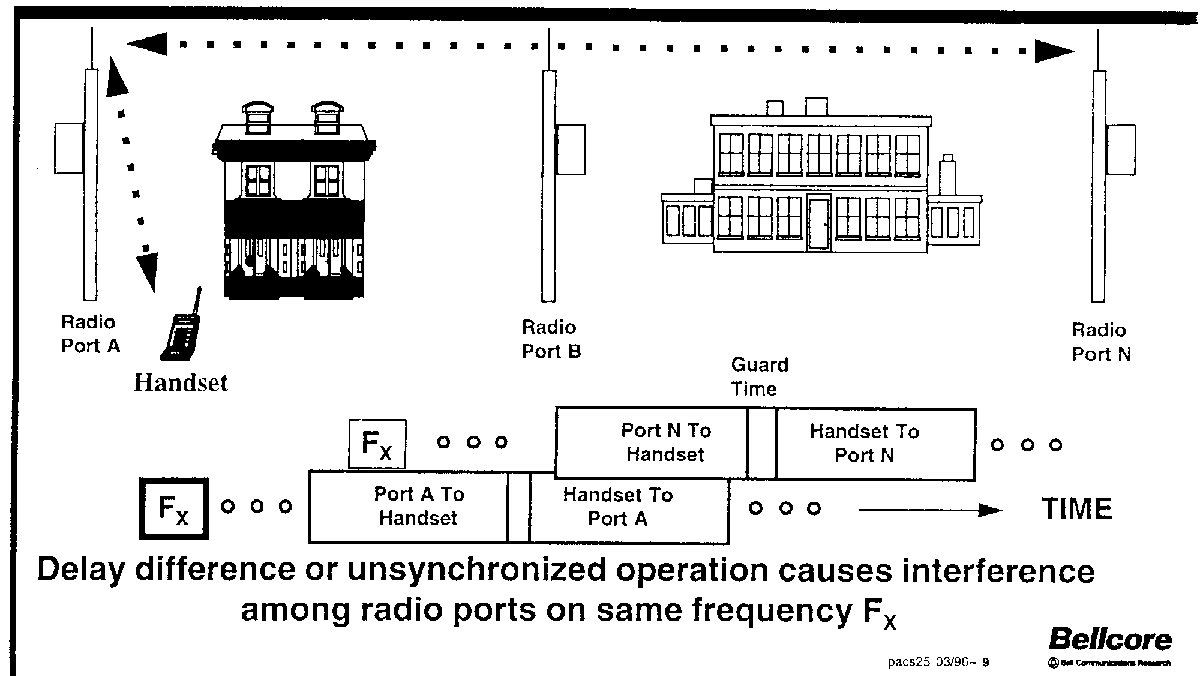
These outdoor radio ports may be served from several different switching systems; especially in a competitive environment with several competing service providers
Without wide area synchronization and delay equalization, TDD systems may lose 50% of system capacity
| Inter-Port Sync for TDD |
|---|
♦ TDD Does Not requires Wide Area Inter-Port Synchronization and Delay Equalization of all radio ports
♦ Lower cost
Without synchronization and delay equalization among radio ports, FDD systems reuses frequencies in much shorter distance (i.e. more efficiently) than TDD system do for outdoor environments.
| Comparison Of System Gains Of PACS,PHS And DECT |
|---|
| System | PACS | PHS | DECT
| Transmitter Power (dBm)
| 23
| 17
| 24
| Receiver Sensitivity (dBm)
| -101
| -84
| -80
| System Gain (dB)
| 124
| 101
| 104
| |
|---|
♦ System Gain = Transmitter Power - Receiver Sensitivity
Sun Feb 6 00:47:52 CST 2011| Greater Coverage Range And Lower Deployed Cost Of PACS |
|---|
Cell size is proportional to system gain
System Gain of PACS is better than those of PHS and DECT by more than 20 dB
Cell size of PACS is 3 times greater than those of PHS and DECT
PHS and DECT need 9 times(i.e., square of 3 of 2-dimensional deployment) more radio ports than PACS does to cover the same city
Deployed PHS and DECT systems will be at least 9 times more expensive than PACS due to this factor
| Main Factors Contributing to Excellent System Gain of PACS |
|---|
Bellcore patents on burst coherent carrier recovery and demodulation method based on digital signal processing technique.
The technique is completely digital resulting in greatly simplified circuitry that is very suitable for low power VLSI implementation => Repatable excellent performance
| Lower Cost Of PACS Radio Port |
|---|
Transceivers in TDD radio ports are idling 50% of time in the "Ping-Pong" mode of TDD duplex transmission
TDD systems need twice more radio transceivers in radio port to match capacity of FDD system
♦ Example:
A PACS carrier has 8 time slots and provides 7 two-way voice circuits(one time slot for common control functions)
A PHS carrier also has 8 time slots but provides ONLY 4 two-way voice circuits
| Comparison Of User's Speed Limit |
|---|
| System | User's Speed Limit km/hour
| PACS(enhanced handset)
| 100
| PACS(basic handset)
| 60
| PHS
| 8
| DECT
| 4
| |
|---|
| Main factors Contributing To Higher Speed Limit For PACS Users |
|---|
PACS uses two branch antenna diversity protection at both radio port and handset
Note:PHS and DECT use only one antenna in handset
Short latency of 0.3 ms between diversity measurements and diversity switch/selection
The latency in PHS is 2.5 ms which is 8 time longer than that of PACS
The latency in DECT in 5 ms which is 16 time long than that of PACS
Fast handoff(required time to complete handoff) is 0.05 second or less for PACS and is about 1 second for PHS
| Summary - Cost Advantages Of FDD-PACS |
|---|
Required number of radio ports to cover a city is smaller than those of PHS and DECT by a factor of 9
Number of radio transceivers in radio port is less than that of PHS by a factor of 2 for equal capacity
Unproductive registration traffic in the network supporting PACS is smaller than that of PHS by a factor of 154 and that of DECT by a factor of 10
Does not require wide area synchronization and delay equalization for all radio ports re-use frequency more efficiently
| Summary - Additional Advantages Of PACS Over PHS And DECT |
|---|